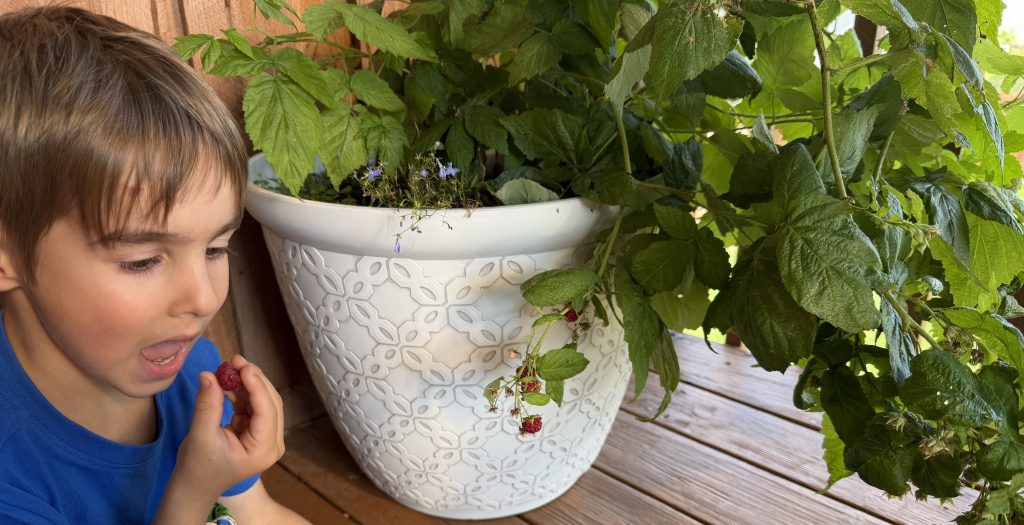
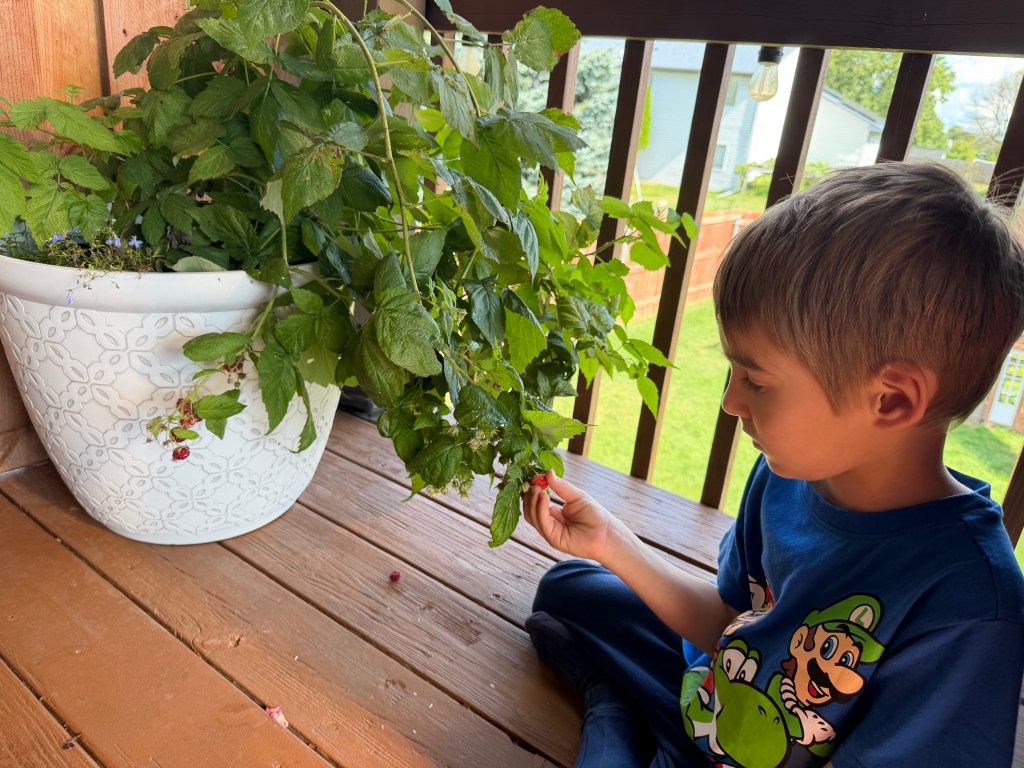
Growing raspberries in pots is certainly possible. It’s a great way to have fresh berries even if you don’t have a lot of garden space. Here’s a step-by-step guide to growing raspberries in containers:
1. Choose the Right Container
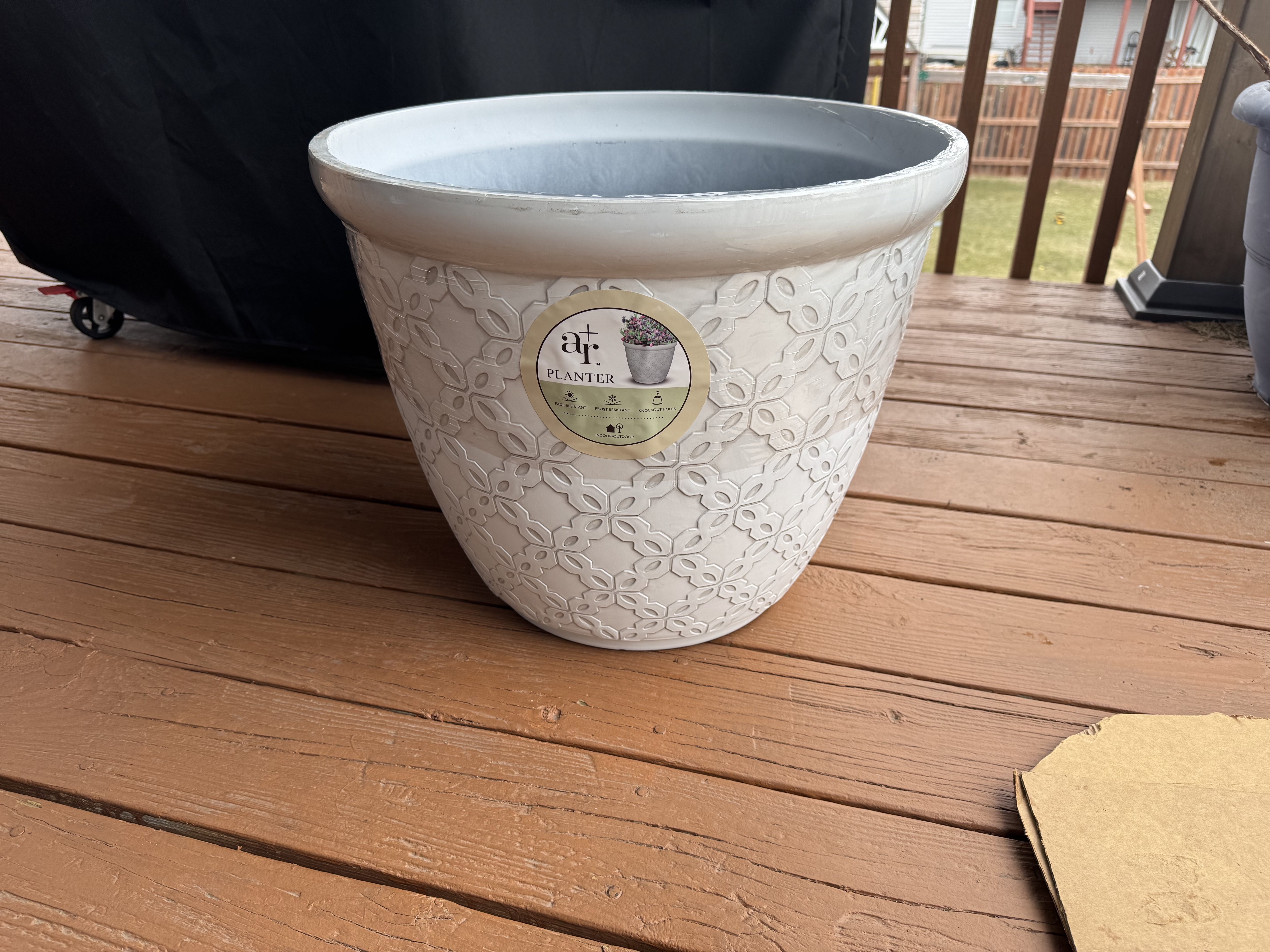
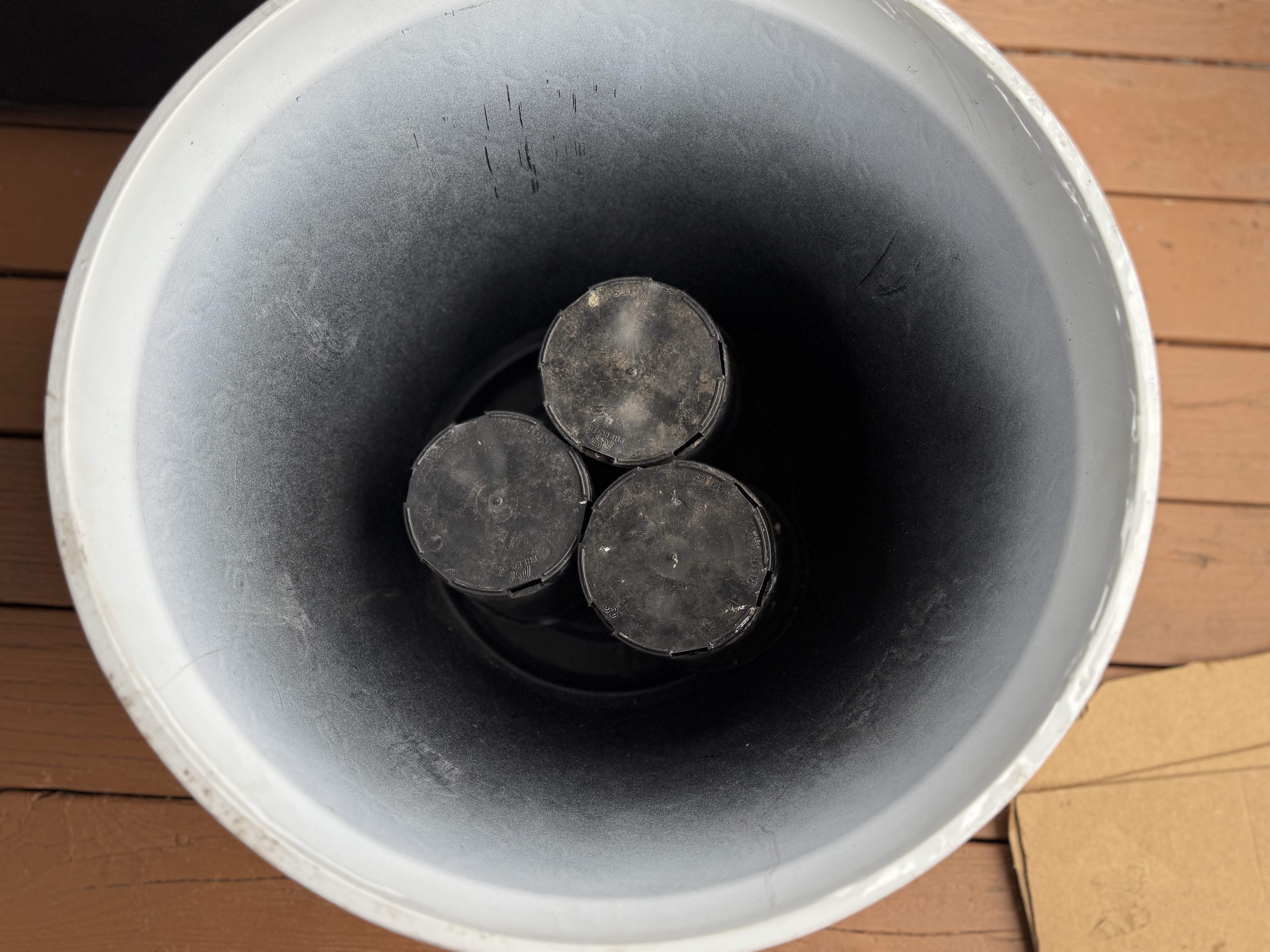
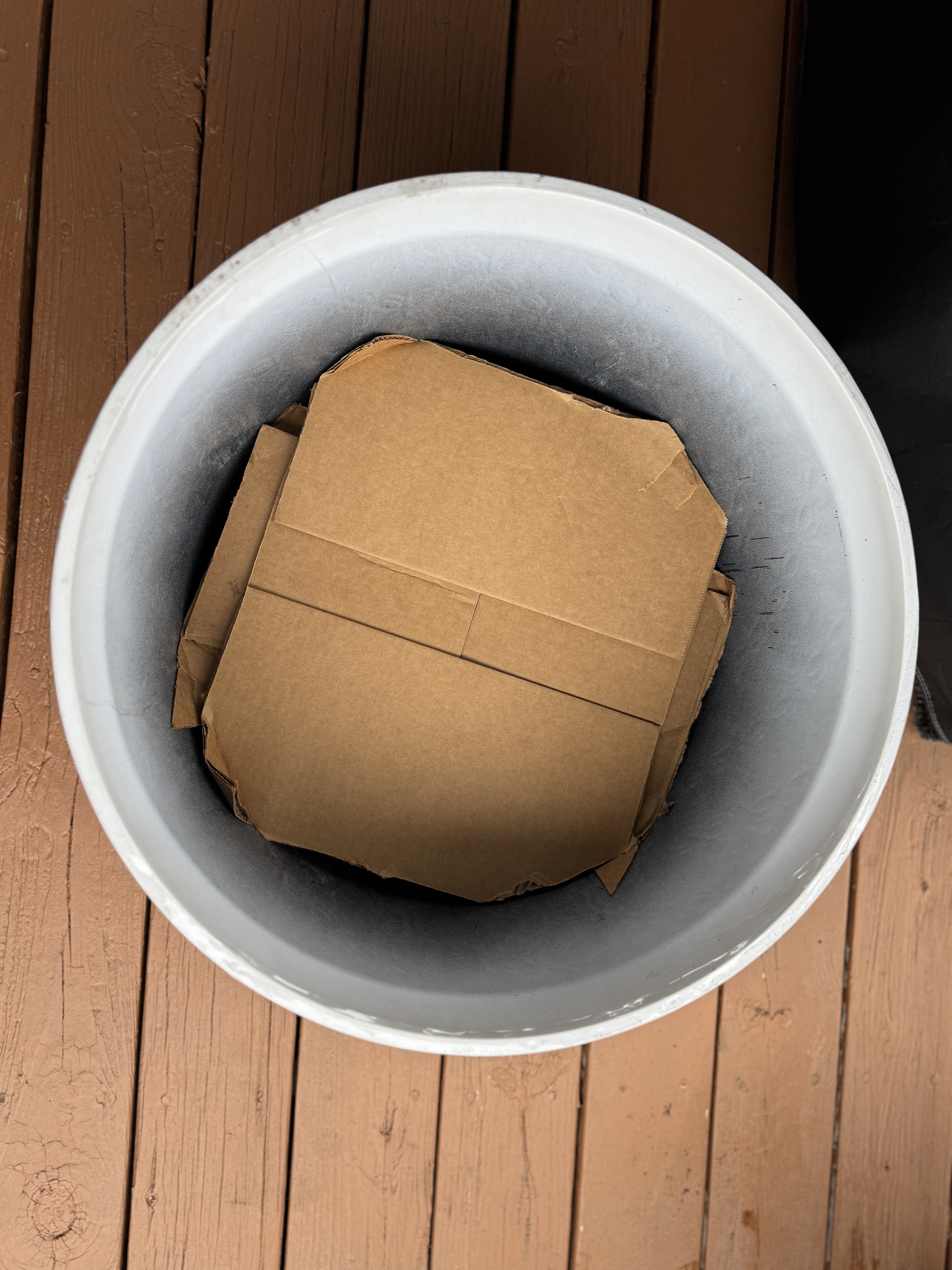
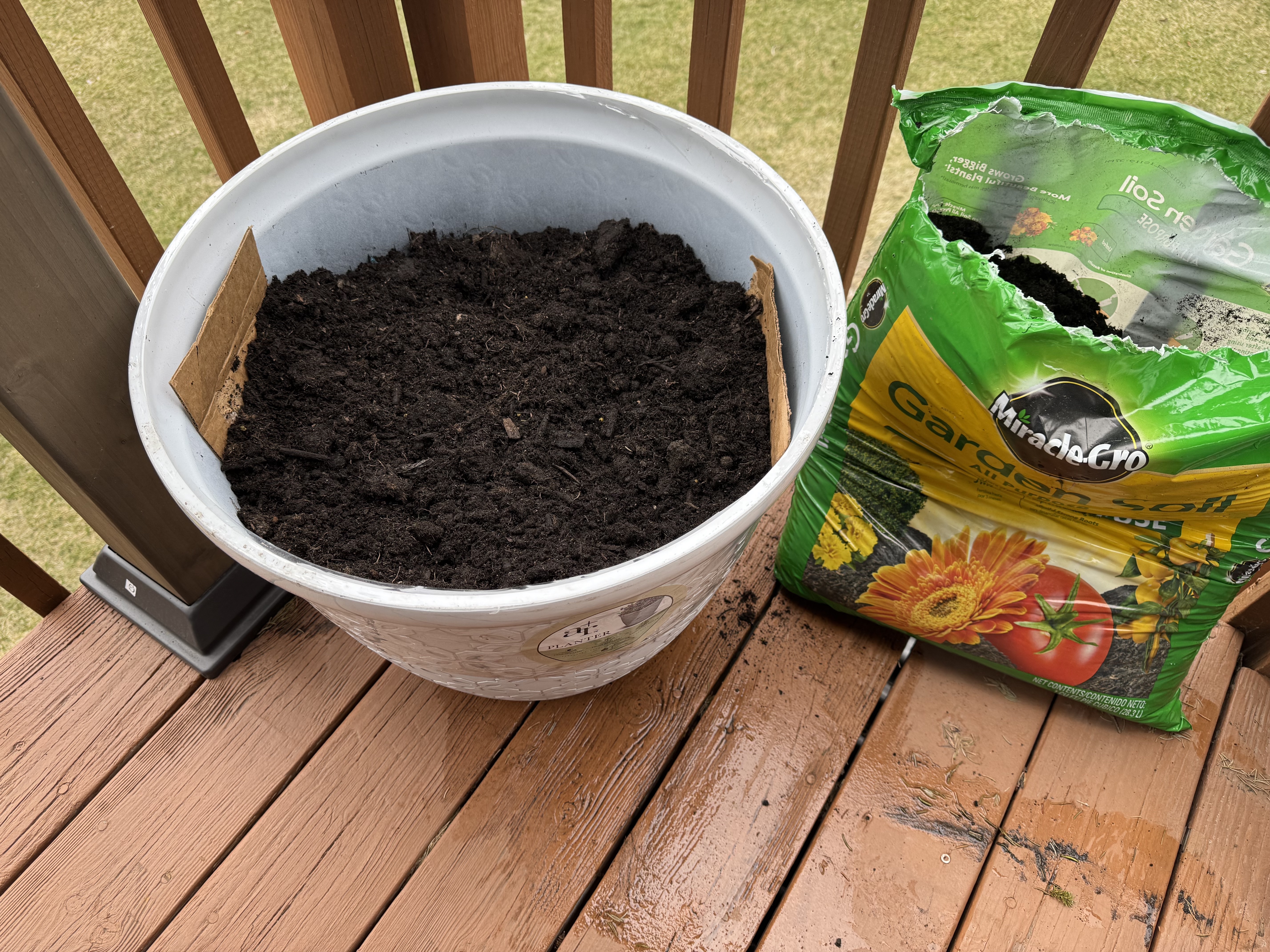
- Size: The container should be at least 18–24 inches wide and 18 inches deep. Raspberries have deep root systems, so they need enough room to grow.
- Material: Choose a container made from plastic, ceramic, or wood. Make sure it has good drainage holes to prevent water logging.
- Volume: For one or two raspberry plants, you’ll need a container that holds around 10–20 gallons of soil.
2. Select the Right Raspberry Variety

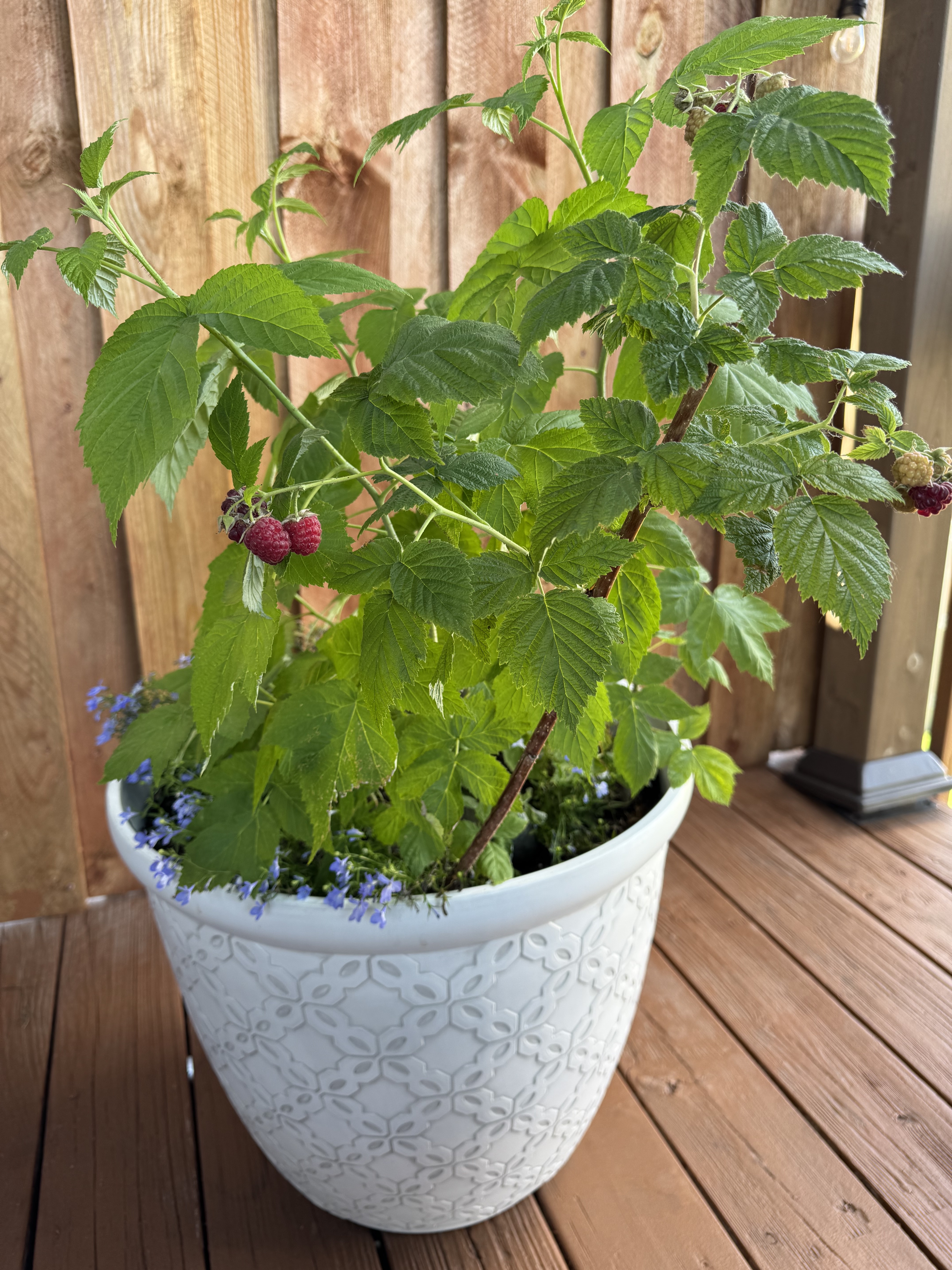

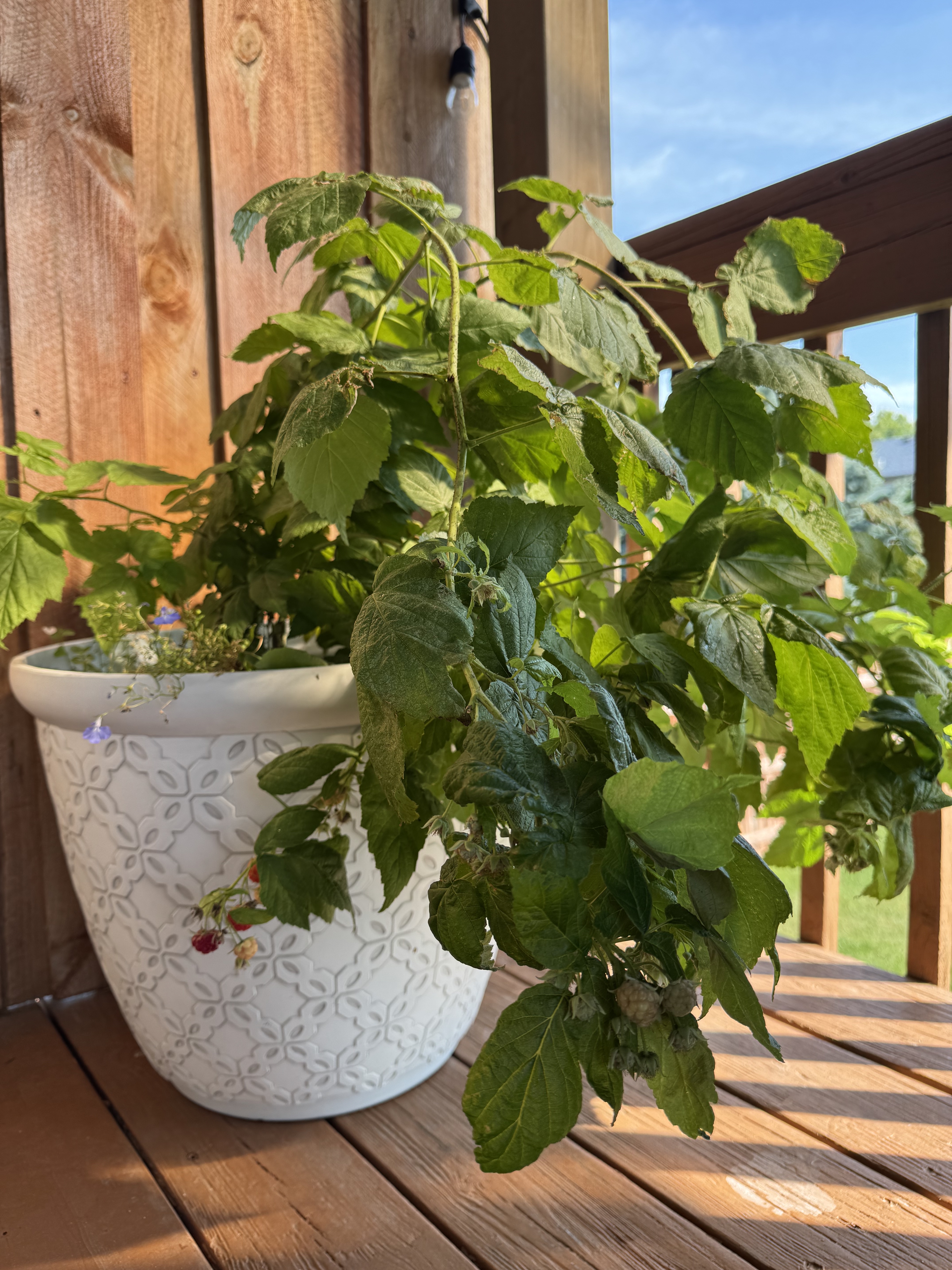
- Ever-bearing raspberries (like ‘Autumn Bliss’ or ‘Heritage’) are often better suited for pots. They are more compact. These raspberries can produce fruit in smaller spaces.
- Dwarf varieties: Some varieties are bred specifically for container growing. These are smaller and more manageable than standard varieties.
3. Choose the Right Potting Mix
- Use a high-quality potting mix that’s well-draining. You can add compost or well-rotted manure to the mix to improve fertility.
- Avoid garden soil as it can become too compact in containers and it doesn’t drain well enough.
4. Planting the Raspberries
- Fill the container with the potting mix, leaving about 2 inches from the top.
- Planting depth: Make sure the crown of the raspberry plant is at soil level. The crown is where the roots meet the canes.
- Space the plants 18–24 inches apart if you’re planting more than one in the same container.
5. Offer Support for Stems Growth
- Raspberries will need support to grow upright in a pot. Set up a simple trellis system or stake to keep the canes from flopping over.
- You can use a tall tomato cage. Bamboo poles are another choice. Alternatively, attach a string trellis to the sides of the container.
6. Watering
- Containers dry out faster than in-ground soil, so water regularly—especially during hot weather. Raspberries need consistent moisture to thrive.
- Be careful not to over water, though. Make sure that excess water drains out of the bottom of the pot, as soggy roots can lead to rot.
- Using a self-watering pot or adding a water-retaining gel to the soil can help prevent drying out between watering.
7. Fertilizing
- Raspberries in containers will need regular feeding because they can deplete the soil of nutrients faster than in-ground plants.
- Use a balanced, water-soluble fertilizer once a month in the growing season. Alternatively, you can top-dress with compost or use organic fertilizer pellets.
- Be sure not to over-fertilize, as this can cause excessive leafy growth at the expense of fruit production.
8. Pruning and Maintenance
- Prune regularly: After the fruiting season, prune away any dead or damaged canes. For ever-bearing varieties, you can prune them back to the ground after the fall harvest.
- Keep the canes tied to the support throughout the growing season to encourage upward growth and avoid tangling.
- Since raspberries can spread, you want to trim back any side shoots that try to take over the pot.
9. Winter Care
- Protect from cold: In cold climates, you need to bring the pots inside during the winter. You can also give some protection. Wrap the pots in burlap or foam insulation to protect the roots from freezing. You can also move them to a sheltered spot like a garage or basement.
- If you live in a mild climate, make sure the container doesn’t dry out excessively in winter. Check it regularly to preserve the right moisture level.
10. Harvesting
- Your raspberries will be ready for harvest when they come off the plant easily, and they’re fully colored. Gently pick the fruit and enjoy the bounty!
Bonus Tips:
- Rotate the Pot: If you’re growing raspberries in a container on a patio, rotate the pot every few weeks. Do the same if it is on a balcony. This ensures even growth on all sides.
- Mulching: Add a thin layer of mulch on top of the soil. This helps keep moisture. It also keeps the roots cool.
- Container Size: If you plan to grow multiple raspberry plants, use a larger container. You also consider multiple pots. This ensures each plant has enough room to spread out.
Container-grown raspberries won’t produce as much as in-ground plants, but they can still yield a nice harvest. Are you planning to grow them on a balcony, patio, or somewhere else?
- It is best to plant them early in the spring to allow enough time for the plant to get established. The plant will need at least 6 weeks to form a new root system.
- Plants can be purchased at local nursery or from a local Facebook Marketplace seller.

 Suburban Livings
Leave a comment